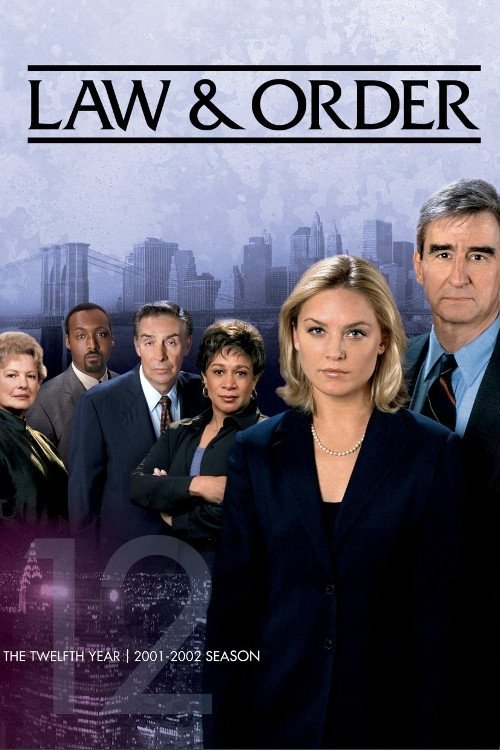
Law & Order Season 12, airing in 2001-2002, features a standard procedural format ripped from headlines with incidental social issue episodes that touch on progressive themes like racism, hate crimes, corporate greed in insurance and food industries, domestic violence via battered wife syndrome, and economic disparity, but these do not dominate the 24-episode season or drive overarching narratives. For example, 'Prejudice' centers on prosecuting a racist murder of a black CEO as a hate crime while debating if racism is a mental defect, presenting balanced arguments rather than lecturing. Other episodes like 'Undercovered' critique insurance denials for a dying child, and 'Equal Rights' invokes battered woman defenses, but most plots focus on standard murders without identity politics or systemic critiques as focal points. Casting maintains organic diversity established in prior seasons—Jesse L. Martin as black detective Ed Green since Season 10, S. Epatha Merkerson as black Lt. Van Buren since Season 5—with a cast change of white ADAs (Elisabeth Röhm replacing Angie Harmon) showing no race/gender-swapping or DEI mandates. No creator statements from Dick Wolf indicate activist intent; the show emphasizes law enforcement and due process over social justice activism. No contemporary or retrospective backlash labels it 'woke'; user reviews praise handling of tough topics like racism without calling it preachy, and no major controversies arose. Overall, progressive elements are minor, era-appropriate, and integrated without prioritizing message over entertainment.