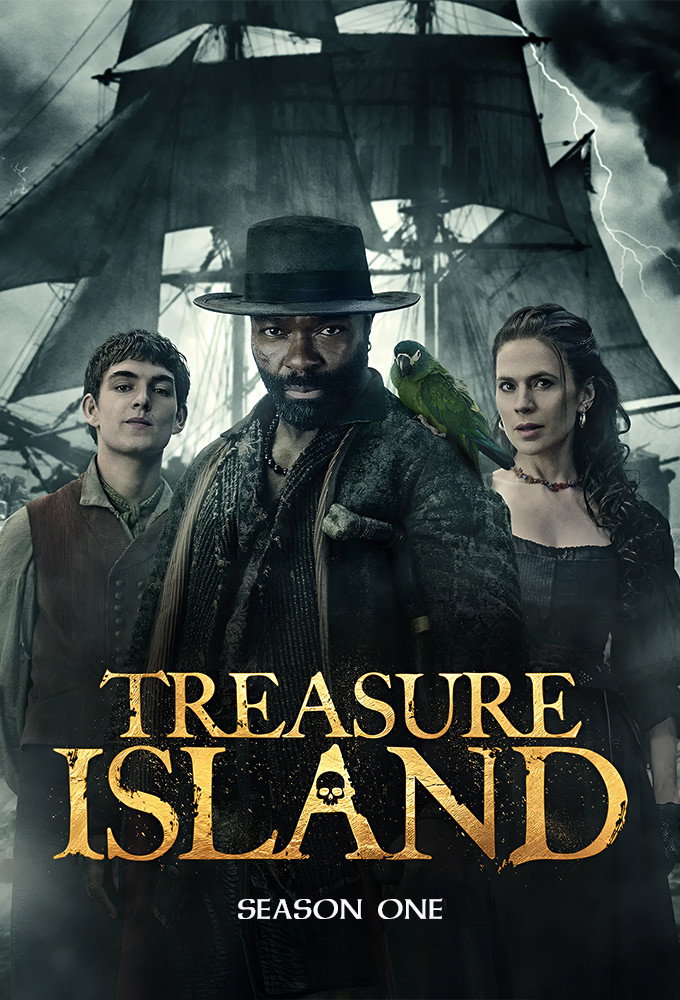
Wokeometer Rating
7Woke
Scale: 0 = not woke, 10 = maximally woke
TL;DR Verdict
Treasure Island Season 1 earns a 7/10 woke score by rewriting Long John Silver with an oppression backstory and elevating Bess Hawkins into a central role driving revolution-themed subplots, all to deliver explicit "fairer representation" messaging that crowds out the classic adventure. Skip it if you want the original tale without the modern ideological overhaul.
Paid creator placementsFeature your article or video on this page
Detailed Analysis
Treasure Island Season 1 centers its six-episode narrative on the classic treasure hunt aboard the Hispaniola, mutiny led by Long John Silver, and conflicts on Skeleton Island, yet deliberately alters core elements for contemporary framing.
David Oyelowo portrays Long John Silver as a former Caribbean slave with a Jamaican accent and explicit backstory tied to escape from oppression, a marked departure from the novel's white pirate that the creators integrated as foundational to the character's motivation and the story's historical lens. Hayley Atwell's Bess Hawkins shifts from a peripheral mother figure to an active participant driving subplots involving protection, alliances, and personal stakes alongside Jim and Graham.
The San Domingue episode explicitly draws Jim into scenes of power, politics, and revolution, layering themes of systemic barriers and freedom-seeking that align with the reimagined Silver's arc. Creator Robert Murphy and the cast have described these choices as providing "fairer representation" and context for a "modern-day audience," with Oyelowo noting the intent to break subconscious prejudices through visible Black and female centrality in a traditionally white, male-dominated tale.
Reception highlights the ambitious reimagining but notes it feels undercooked, with the changes prominent enough to define the adaptation's identity without fully supplanting the adventure premise. The race-swapped Silver and expanded Bess roles, combined with the revolution subplot and stated activist-adjacent intent, make progressive ideological elements significant and influential on casting, character arcs, and thematic emphasis.
David Oyelowo as Long John Silver: Race and backstory departure from established white character Hayley Atwell as Bess Hawkins: Major expansion and gender-role elevation of minor original character
Key Factors
- Confirmed race-swap of established character Long John Silver with integrated slave backstory and Jamaican portrayal
- Major expansion of minor original character Mrs. Hawkins into central female adventurer Bess
- San Domingue subplot introducing politics, revolution, and systemic themes as explicit narrative element
- Creator and cast statements emphasizing representation, breaking prejudices, and modern relevance
Methodology: Each score synthesizes audience discourse, critic and aggregator reception, and press coverage — weighed against the work itself, not any single source.
Pro BreakdownPro
Identity Politics & Racial Essentialism
Gender Ideology & LGBTQ+ Themes
DEI Casting & Representation Mandates
Preachiness & Message-First Agenda
Corporate & Creator Activism
See how this title scores across all 5 woke subcategories with detailed explanations.
Unlock with ProFrom $3/month · 3-day trial for $1
The Woke Report
A curated roundup of newly scored movies, shows, and games, with the context behind the scores. Free. Unsubscribe anytime.
Privacy policyDirected by
Is Treasure Island - Season 1 Woke?
We've run a full content analysis on Treasure Island - Season 1 and scored it 7/10 on the woke scale. Read our detailed breakdown above to see exactly what we found.
Frequently Asked Questions
What kind of woke content is in Treasure Island - Season 1?
Our analysis checks for themes like identity politics, race-swapping, gender ideology, environmental activism, anti-religious messaging, and other progressive agenda elements. The score breakdown above shows which specific categories were flagged and how heavily they factor into Treasure Island - Season 1's overall score.
Is Treasure Island - Season 1 family-friendly?
Wokeometer focuses on ideological content rather than traditional ratings (violence, language, etc.). Treasure Island - Season 1 is rated TV-PG. For a full picture, combine our woke analysis with the age rating to decide if it's right for your family.
How does Wokeometer score tv shows?
We evaluate media across multiple ideological categories on a 0–10 scale. Scores of 0–3 mean story-first, 4–6 have moderate elements, and 7–10 flag heavily agenda-driven content. Learn more about our methodology →