
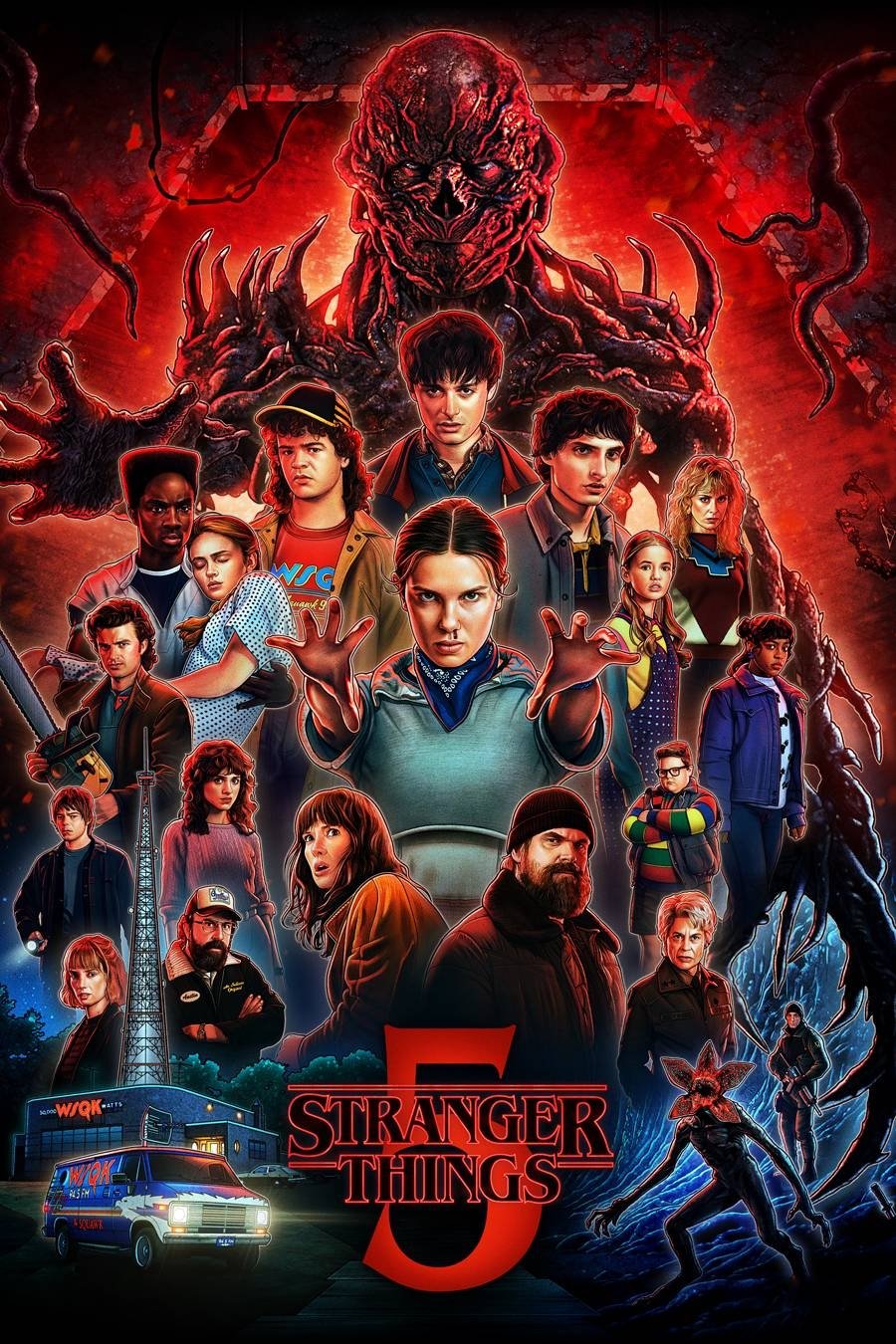
Stranger Things S5 tanked to 56% audience score due to a forced, plot-halting gay coming-out monologue for Will in the lowest-rated episode, sparking massive "woke garbage" backlash over prioritizing LGBTQ+ messaging.
Stranger Things Season 5 features significant progressive ideological influence, particularly through prominent LGBTQ+ representation that culminates in a controversial coming-out monologue for Will Byers in the penultimate episode 'The Bridge.' This lengthy scene, described by creators as the most time-intensive to write, halts high-stakes apocalypse preparations for Will to publicly confess his sexuality to friends and family, tying his self-acceptance directly to confronting fears exploited by Vecna and enabling victory—framed by critics as implying superpowers stem from embracing gay identity.
The execution is lambasted as a 'forced spectacle' amid a crowded cast, disrupting pacing and feeling like a lecture, with similar emphasis on Robin's repeated gay declarations (e.g., 'I don’t like dick'). Additional elements include anti-capitalist references (Jonathan's film), mockery of wealthy 'Republican-coded' families, and identity politics dialogues projecting modern views into 1987.
Creators Matt and Ross Duffer defend the arc as organic to Will's long-teased queer journey and themes of 'outsiders embracing otherness,' positioning him moving to a 'bigger city' for acceptance in the finale. No major casting controversies like race/gender swaps; recasts (e.g., Holly Wheeler) are age-appropriate.
However, the season triggered massive backlash: 'The Bridge' is the lowest-rated episode on IMDb, Season 5 audience score plummeted to 56-57% on Rotten Tomatoes (vs. 89% for S4), review-bombing labeled it 'woke garbage,' with Elon Musk calling it 'unnecessary and forced.' X posts and reviews decry Netflix prioritizing 'gay agenda' over story, echoing 'go woke go broke' with filler, plot holes, and weak writing amplifying perceptions of message-over-entertainment.
Methodology: Each score synthesizes audience discourse, critic and aggregator reception, and press coverage — weighed against the work itself, not any single source.
Creators Matt and Ross Duffer emphasize Will's queer journey and themes of 'outsiders embracing otherness' in interviews, defending the arc as organic while positioning his finale move to a 'bigger city' for acceptance, amid Netflix backlash for prioritizing progressive credentials.
Unlock the other 4 categories — including Identity Politics and Gender Ideology — with detailed explanations.
Unlock with ProFrom $3/month · 3-day trial for $1
Every Friday: the week's most ideologically-loaded releases, scored — with the breakdown the headlines skip. Free, no spam, unsubscribe anytime.
We've run a full content analysis on Stranger Things - Season 5 and scored it 8/10 on the woke scale. Read our detailed breakdown above to see exactly what we found.
Our analysis checks for themes like identity politics, race-swapping, gender ideology, environmental activism, anti-religious messaging, and other progressive agenda elements. The score breakdown above shows which specific categories were flagged and how heavily they factor into Stranger Things - Season 5's overall score.
Wokeometer focuses on ideological content rather than traditional ratings (violence, language, etc.). Stranger Things - Season 5 is rated TV-14. For a full picture, combine our woke analysis with the age ratingto decide if it's right for your family.
We evaluate media across multiple ideological categories on a 0–10 scale. Scores of 0–3 mean story-first, 4–6 have moderate elements, and 7–10 flag heavily agenda-driven content. Learn more about our methodology →
Similar titles you might enjoy
gayyyyy