← Back to Jaadugar: A Witch in Mongolia
Jaadugar: A Witch in Mongolia - Season 1
tv
14
Season 1
July 4, 2026
Wokeometer Rating
3Based
Scale: 0 = not woke, 10 = maximally woke
TL;DR Verdict
Jaadugar earns its low 3/10 woke score by centering intellect, survival, and Mongol-era court intrigue without lectures or identity politics. The story stays rooted in historical research and character-driven plotting.
Paid creator placementsFeature your article or video on this page
Detailed Analysis
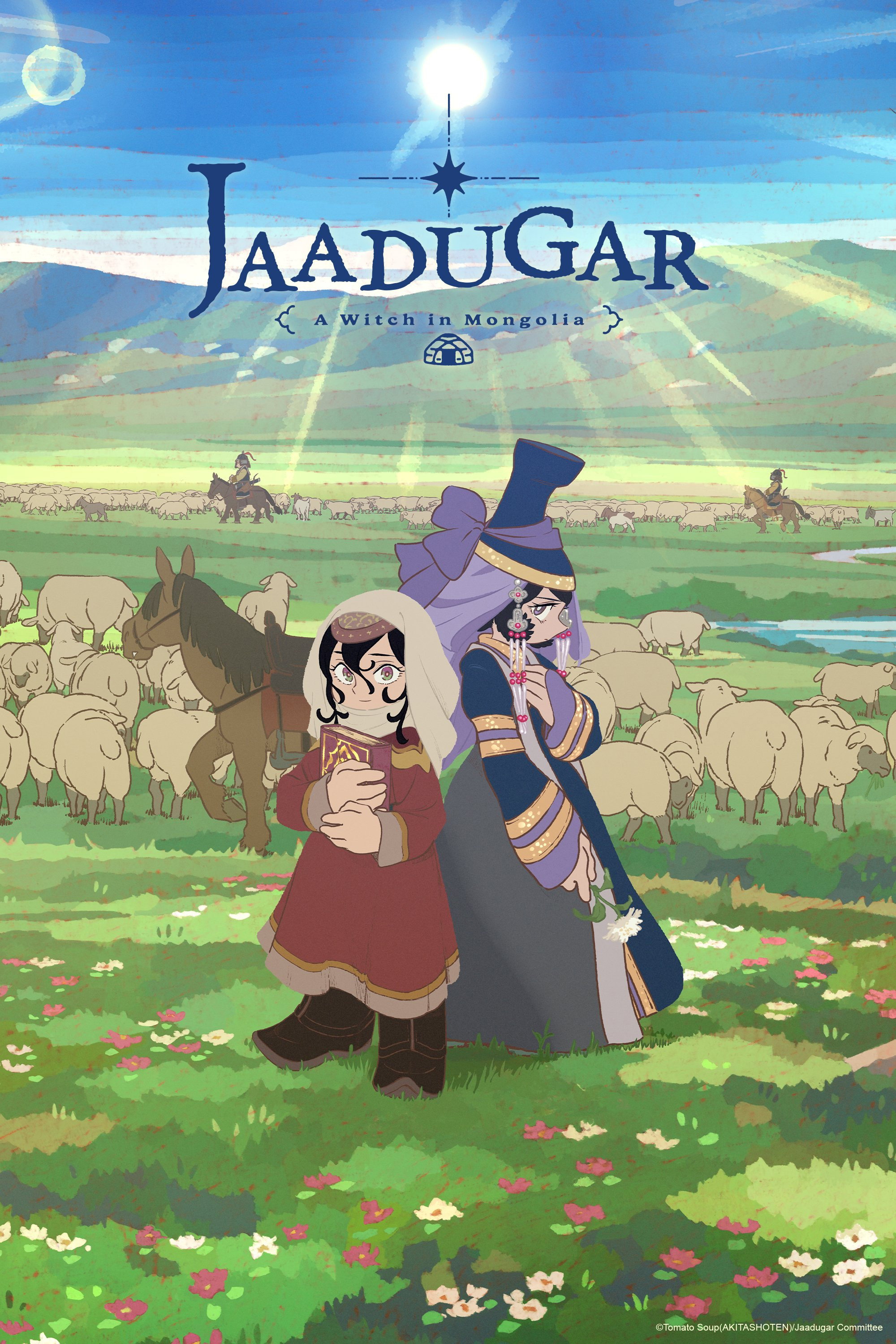
Jaadugar: A Witch in Mongolia Season 1 centers on Sitara, a Persian slave girl sold to scholars who teaches her Euclid's Elements and the value of knowledge before Mongol invasion destroys her home.
She infiltrates the court under Fatima's name, allying with Töregene and Sorghaghtani for intrigue and revenge, drawing from real 13th-century Mongol empresses' documented political roles. The 12-episode arc emphasizes survival through intellect amid empire-building, slavery, and war, with episodes like tutoring in geometry and court spying showing concrete plot mechanics rooted in historical scholarship and Mongol politics rather than modern framing.
Creator statements from director Naoko Yamada stress extensive research into Persian and Mongol cultures, respect for historical nuance, and avoiding one-sided portrayals, corroborated by the manga's author Tomato Soup noting corrections for chronology and details during adaptation. Reviews highlight the story's focus on knowledge as leverage and multidimensional characters in a brutal system, without lectures on systemic oppression or identity politics. Female agency emerges organically from the era's documented court dynamics and the protagonist's education arc.
Casting features exclusively Japanese voice actors in original or historically inspired roles with no race or gender swaps of established characters. Minor elements like prominent capable women and cultural representation of Persian/Muslim scholarship fit incidental historical storytelling, not driving centrality or activist intent. Reception includes praise for depth and some unrelated cultural accuracy debates, but no evidence of DEI mandates or premise-altering ideology.
Casting evidence: Casting research is incomplete or contains unresolved comparisons; overall casting fidelity has not been established. Documented credits include Akira Sekine as Sitara (voice); Ami Koshimizu as Töregene (voice). The casting comparison for Akira Sekine as Sitara (voice) remains unresolved. The casting comparison for Ami Koshimizu as Töregene (voice) remains unresolved.
Key Factors
- Original historical fiction with female leads justified by plot (scholarship and court intrigue) and real Mongol history
- Creator emphasis on cultural research and nuance without modern activist framing or source changes
- No verified casting departures, LGBTQ+ normalization, or identity politics as narrative core
Methodology: Each score synthesizes audience discourse, critic and aggregator reception, and press coverage — weighed against the work itself, not any single source.
Pro BreakdownPro
Identity Politics & Racial Essentialism
Gender Ideology & LGBTQ+ Themes
DEI Casting & Representation Mandates
Preachiness & Message-First Agenda
Corporate & Creator Activism
See how this title scores across all 5 woke subcategories with detailed explanations.
Unlock with ProFrom $3/month · 3-day trial for $1
The Woke Report
A curated roundup of newly scored movies, shows, and games, with the context behind the scores. Free. Unsubscribe anytime.
Privacy policyDirected by
Is Jaadugar: A Witch in Mongolia - Season 1 Woke?
We've run a full content analysis on Jaadugar: A Witch in Mongolia - Season 1 and scored it 3/10 on the woke scale. Read our detailed breakdown above to see exactly what we found.
Frequently Asked Questions
What kind of woke content is in Jaadugar: A Witch in Mongolia - Season 1?
Our analysis checks for themes like identity politics, race-swapping, gender ideology, environmental activism, anti-religious messaging, and other progressive agenda elements. The score breakdown above shows which specific categories were flagged and how heavily they factor into Jaadugar: A Witch in Mongolia - Season 1's overall score.
Is Jaadugar: A Witch in Mongolia - Season 1 family-friendly?
Wokeometer focuses on ideological content rather than traditional ratings (violence, language, etc.). Jaadugar: A Witch in Mongolia - Season 1 is rated 14. For a full picture, combine our woke analysis with the age rating to decide if it's right for your family.
How does Wokeometer score tv shows?
We evaluate media across multiple ideological categories on a 0–10 scale. Scores of 0–3 mean story-first, 4–6 have moderate elements, and 7–10 flag heavily agenda-driven content. Learn more about our methodology →