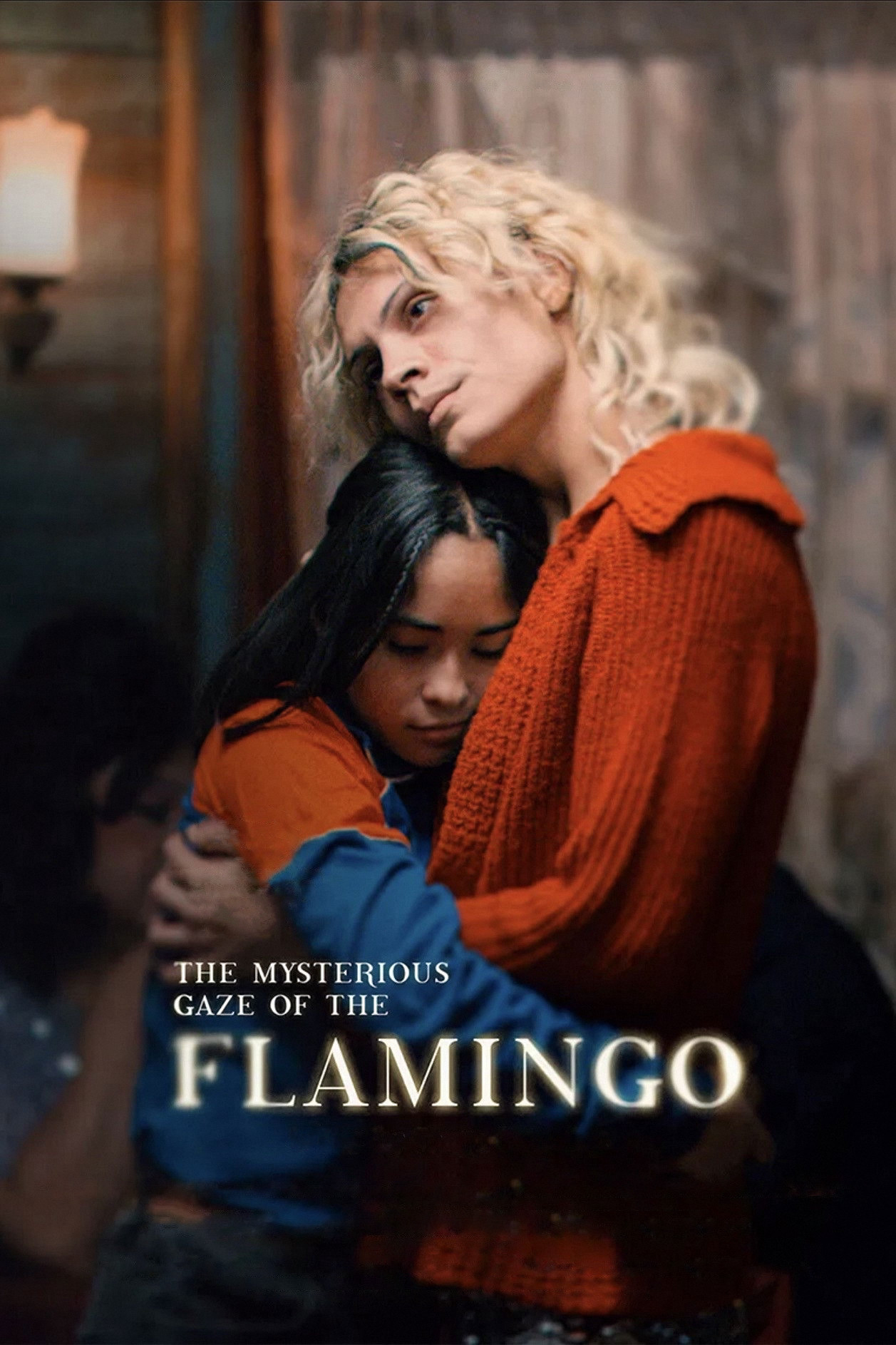
The Mysterious Gaze of the Flamingo
movie·16·Dec 12, 2025·
The Mysterious Gaze of the Flamingo
movie
16
December 12, 2025
Wokeometer Rating
9Woke
Scale: 0 = not woke, 10 = maximally woke
TL;DR Verdict
The film scores 9/10 for woke content because its entire plot, magical elements, and emotional core revolve around an AIDS allegory centered on drag performers, chosen family, and accusations of homophobia and transphobia. Skip it if you want story over identity-driven messaging.
Paid creator placementsFeature your article or video on this page
Detailed Analysis
The film's core premise is an allegory for the early AIDS crisis in 1980s Chile, centered on a found family of drag performers and trans women in a remote mining town.
The deadly disease is mythologized as transmitted by a loving gaze between men (or involving trans women), directly tying the narrative to queer male and trans relationships, stigma, and societal fear. Lidia, the child protagonist, navigates transphobic bullying and community accusations against her family, with scenes of protective violence by the women and romantic tension involving Flamingo (Matías Catalán) and miner Yovani.
This is not incidental diversity or background representation. The entire plot, emotional driver, and magical-realist elements revolve around queer resistance, chosen family, and critiques of homophobia, transphobia, and misinformation about LGBTQ+ people. Director Diego Céspedes has described the story as inspired by personal experiences with gay men dying of AIDS and emphasized tenderness in queer households, framing it as a universal tale of empathy against fear and hatred.
Reception highlights the poetic exploration of queer themes, with critics noting its focus on found family and resistance. No established characters are swapped, but the affirmative, prominent portrayal of trans and drag identities as the heart of the story, combined with the AIDS allegory as central conflict, makes progressive ideological elements foundational rather than additive. The work prioritizes identity-based oppression narratives over traditional storytelling.
Casting evidence: Casting research is incomplete or contains unresolved comparisons; overall casting fidelity has not been established. Documented credits include Matías Catalán as Flamingo / Flamenco; Tamara Cortés as Lidia. The casting comparison for Matías Catalán as Flamingo / Flamenco remains unresolved. The casting comparison for Tamara Cortés as Lidia remains unresolved.
Key Factors
- Core premise is AIDS allegory transmitted via male/trans gaze and love, centering queer relationships and stigma
- Found family of trans women and drag performers as primary characters and emotional core, with explicit transphobic bullying and community violence scenes
- Director statements emphasize queer chosen family, tenderness, and resistance to fear/hatred as thematic intent
Methodology: Each score synthesizes audience discourse, critic and aggregator reception, and press coverage — weighed against the work itself, not any single source.
Pro BreakdownPro
Identity Politics & Racial Essentialism
Gender Ideology & LGBTQ+ Themes
DEI Casting & Representation Mandates
Preachiness & Message-First Agenda
Corporate & Creator Activism
See how this title scores across all 5 woke subcategories with detailed explanations.
Unlock with ProFrom $3/month · 3-day trial for $1
The Woke Report
A curated roundup of newly scored movies, shows, and games, with the context behind the scores. Free. Unsubscribe anytime.
Privacy policyDirected by
Is The Mysterious Gaze of the Flamingo Woke?
We've run a full content analysis on The Mysterious Gaze of the Flamingo and scored it 9/10 on the woke scale. Read our detailed breakdown above to see exactly what we found.
Frequently Asked Questions
What kind of woke content is in The Mysterious Gaze of the Flamingo?
Our analysis checks for themes like identity politics, race-swapping, gender ideology, environmental activism, anti-religious messaging, and other progressive agenda elements. The score breakdown above shows which specific categories were flagged and how heavily they factor into The Mysterious Gaze of the Flamingo's overall score.
Is The Mysterious Gaze of the Flamingo family-friendly?
Wokeometer focuses on ideological content rather than traditional ratings (violence, language, etc.). The Mysterious Gaze of the Flamingo is rated 16. For a full picture, combine our woke analysis with the age rating to decide if it's right for your family.
How does Wokeometer score movies?
We evaluate media across multiple ideological categories on a 0–10 scale. Scores of 0–3 mean story-first, 4–6 have moderate elements, and 7–10 flag heavily agenda-driven content. Learn more about our methodology →