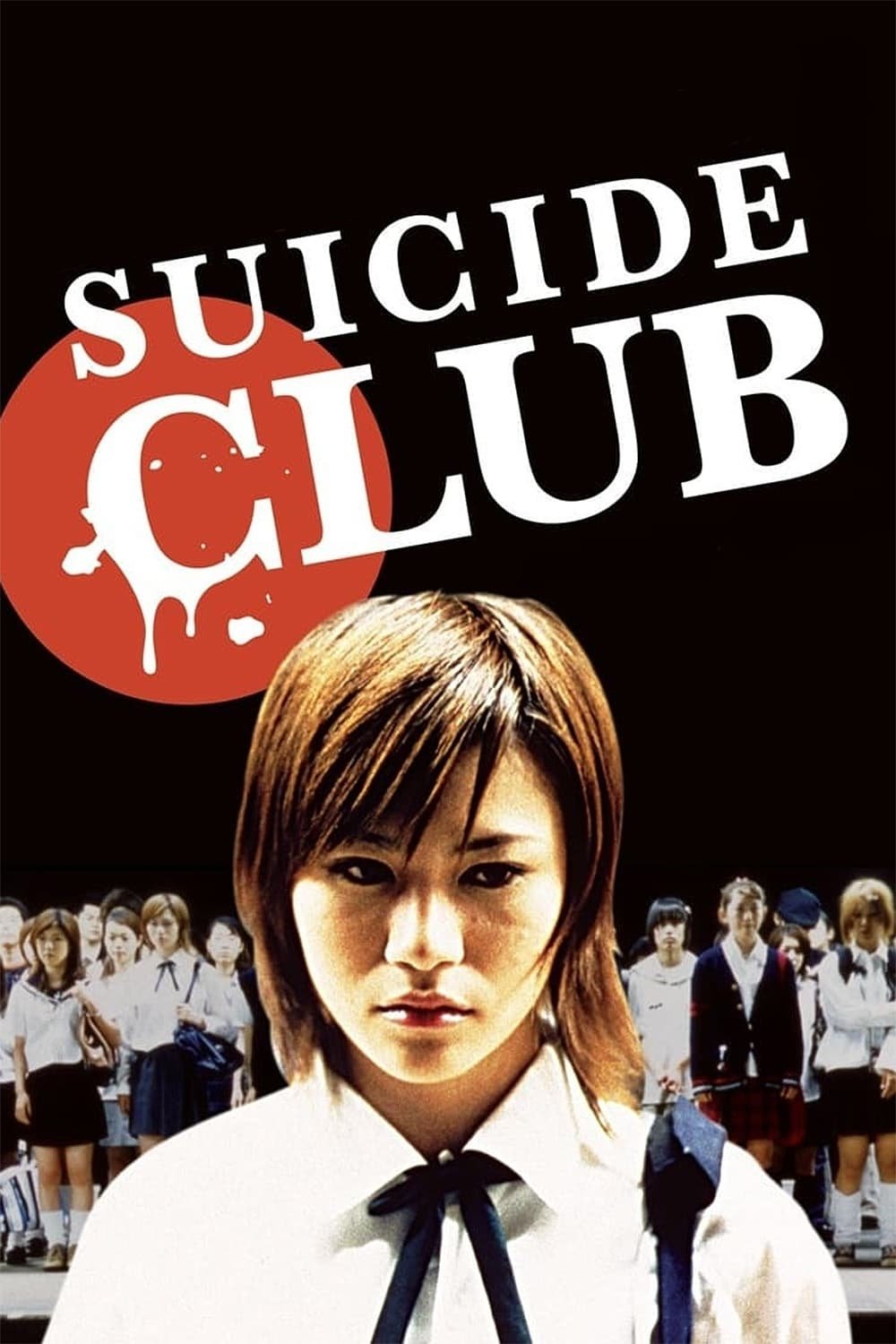
Suicide Club
movie·18·Jan 1, 2002·
Suicide Club sticks to authentic Japanese storytelling about media pressure and societal alienation with zero identity politics or progressive agendas. It earns a 0/10 woke score as neutral, story-first entertainment.
Suicide Club (2001), directed by Sion Sono, is a Japanese horror film centered on a wave of mass suicides among high school girls and others across Japan, investigated by Detective Kuroda.
The narrative examines themes of societal alienation, media influence, conformity, loss of individual identity, and the epidemic of youth suicide in contemporary Japan, symbolized by motifs like a roll of human skin and questions about self-connection. These elements draw from Japanese cultural and social realities rather than any progressive ideological framework.
The film maintains authentic Japanese casting and setting with no alterations to established characters or source material, allowing its exploration of existential disconnection, pop culture, and media pressure to remain grounded in local context. Core themes stay free of identity politics or social justice framing, with no creator statements, plot elements, or casting decisions tied to DEI initiatives, gender or sexuality swaps, or critiques of traditional norms in a progressive activist sense. This absence keeps the focus squarely on universal human disconnection within Japanese society, delivering a straightforward examination of conformity and media saturation without injecting external ideological overlays.
Methodology: Each score synthesizes audience discourse, critic and aggregator reception, and press coverage — weighed against the work itself, not any single source.
See how this title scores across all 5 woke subcategories with detailed explanations.
Unlock with ProFrom $3/month · 3-day trial for $1
Every Friday: the week's most ideologically-loaded releases, scored — with the breakdown the headlines skip. Free, no spam, unsubscribe anytime.
We've run a full content analysis on Suicide Club and scored it 0/10 on the woke scale. Read our detailed breakdown above to see exactly what we found.
Our analysis checks for themes like identity politics, race-swapping, gender ideology, environmental activism, anti-religious messaging, and other progressive agenda elements. The score breakdown above shows which specific categories were flagged and how heavily they factor into Suicide Club's overall score.
Wokeometer focuses on ideological content rather than traditional ratings (violence, language, etc.). Suicide Club is rated 18. For a full picture, combine our woke analysis with the age ratingto decide if it's right for your family.
We evaluate media across multiple ideological categories on a 0–10 scale. Scores of 0–3 mean story-first, 4–6 have moderate elements, and 7–10 flag heavily agenda-driven content. Learn more about our methodology →
Similar titles you might enjoy
No reviews yet
Be the first to share what you thought of Suicide Club.