Box Office
Flop · 0.4xBudget$42M
Worldwide Gross$17M
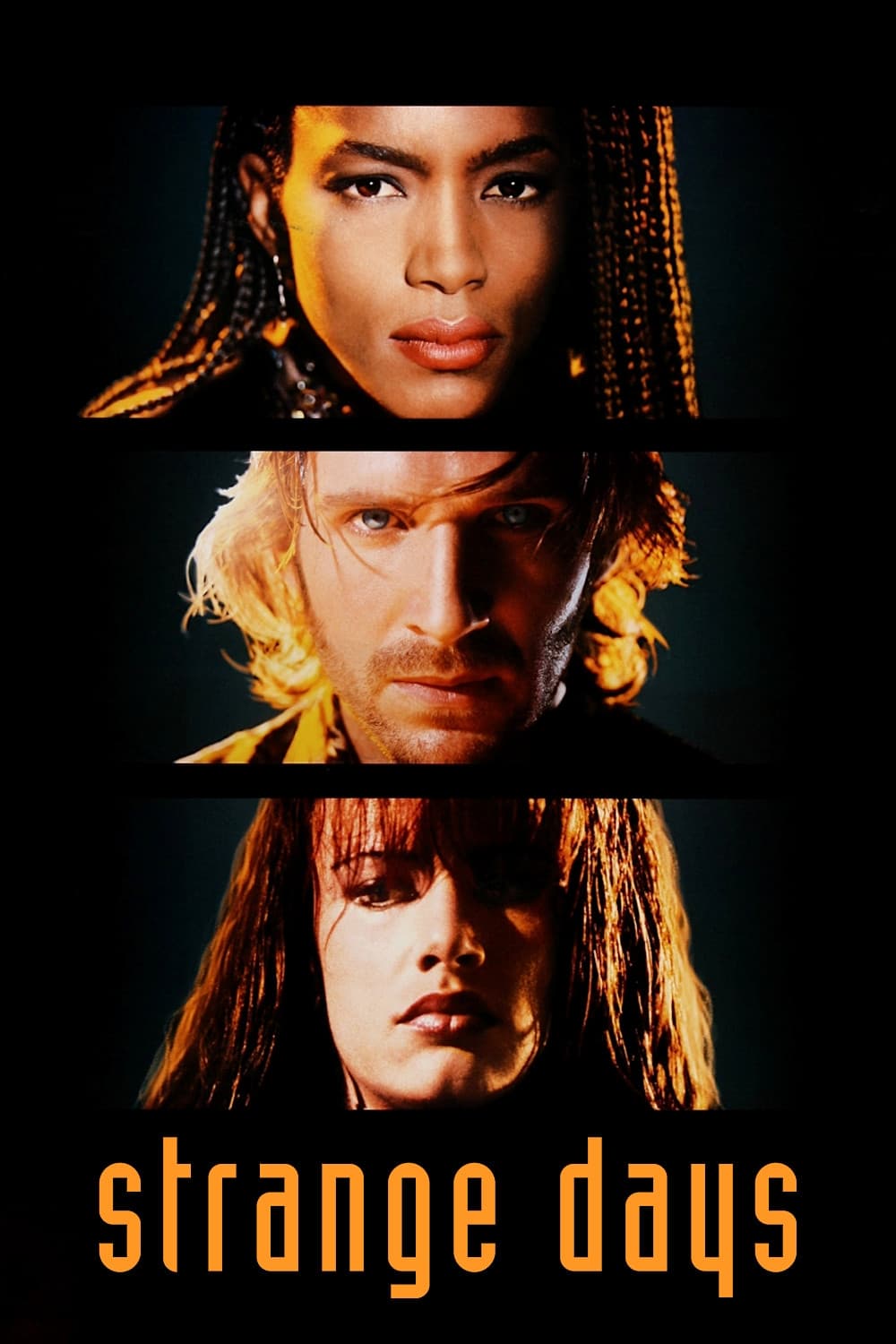
Strange Days
movie·R·Oct 13, 1995·
Box OfficeFlop · 0.4x
$42M
Budget
$17M
Gross
Strange Days
movie
R
October 13, 1995
Wokeometer Rating
6Mixed
Scale: 0 = not woke, 10 = maximally woke
TL;DR Verdict
Strange Days builds intentional commentary on police abuse and voyeuristic media into its neo-noir conspiracy through Jeriko One’s murder and SQUID technology, with Mace acting as the capable moral anchor who repeatedly rescues flawed protagonist Lenny Nero. These elements shape character arcs without overtaking the core focus on personal redemption and technological escapism.
Paid creator placementsFeature your article or video on this page
Detailed Analysis
Strange Days centers a neo-noir conspiracy thriller around the murder of Black rapper Jeriko One by corrupt white LAPD officers, with the recorded evidence igniting racial unrest in a dystopian 1999 Los Angeles explicitly modeled on the Rodney King beating and 1992 riots.
This racial injustice plotline, alongside the graphic POV rape and murder of prostitute Iris, forms a major narrative driver and atmospheric backdrop rather than incidental flavor. Director Kathryn Bigelow, co-writing with James Cameron, incorporated these elements to mirror real societal tensions around police abuse of power and voyeuristic media consumption, with Mace (Angela Bassett) serving as the physically capable, morally grounded Black female lead who repeatedly rescues and challenges the flawed white male protagonist Lenny Nero.
The film layers progressive themes of systemic racism, male gaze critique through SQUID technology, and empowered female agency without making identity politics the sole premise; the core remains personal redemption, blackmail, and tech-fueled escapism. Casting features prominent Black characters in key roles like Jeriko One and Mace as organic to the story's LA setting and social commentary, with no source-material alterations or cross-sex casting of established figures. Reception at release noted the graphic violence and polarized audiences, but later views highlight its prescience on racial issues without widespread modern-style backlash.
These elements register as significant and intentional social commentary influencing character arcs and subplots, elevating the score above purely incidental diversity or traditional storytelling, yet the thriller structure and personal drama keep ideology from overwhelming the narrative foundation.
Key Factors
- Prominent plot involving police killing of Black activist Jeriko One and resulting racial tensions modeled on real 1990s events
- Strong Black female lead Mace as action heroine and moral center in interracial dynamic with protagonist
- Creator intent to address racism, police power abuse, and voyeurism as mirror to society
- Graphic rape/murder scene and male gaze critique via SQUID tech as central inciting incident and thematic thread
- No established character race/gender swaps or source material changes
Methodology: Each score synthesizes audience discourse, critic and aggregator reception, and press coverage — weighed against the work itself, not any single source.
Pro BreakdownPro
Identity Politics & Racial Essentialism
Gender Ideology & LGBTQ+ Themes
DEI Casting & Representation Mandates
Preachiness & Message-First Agenda
Corporate & Creator Activism
See how this title scores across all 5 woke subcategories with detailed explanations.
Unlock with ProFrom $3/month · 3-day trial for $1
The Woke Report
A curated roundup of newly scored movies, shows, and games, with the context behind the scores. Free. Unsubscribe anytime.
Privacy policyDirected by
Is Strange Days Woke?
We've run a full content analysis on Strange Days and scored it 6/10 on the woke scale. Read our detailed breakdown above to see exactly what we found.
Frequently Asked Questions
What kind of woke content is in Strange Days?
Our analysis checks for themes like identity politics, race-swapping, gender ideology, environmental activism, anti-religious messaging, and other progressive agenda elements. The score breakdown above shows which specific categories were flagged and how heavily they factor into Strange Days's overall score.
Is Strange Days family-friendly?
Wokeometer focuses on ideological content rather than traditional ratings (violence, language, etc.). Strange Days is rated R. For a full picture, combine our woke analysis with the age rating to decide if it's right for your family.
How does Wokeometer score movies?
We evaluate media across multiple ideological categories on a 0–10 scale. Scores of 0–3 mean story-first, 4–6 have moderate elements, and 7–10 flag heavily agenda-driven content. Learn more about our methodology →