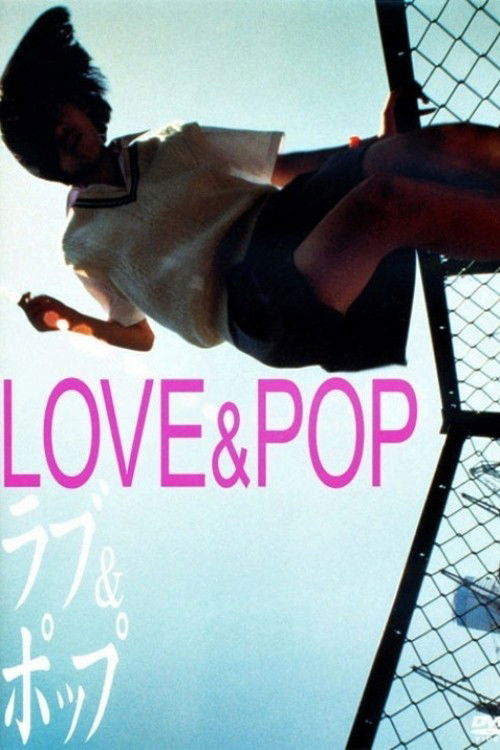
Love & Pop
movie·R·Sep 1, 2025·
Love & Pop
movie
R
September 1, 2025
Wokeometer Rating
3Based
Scale: 0 = not woke, 10 = maximally woke
TL;DR Verdict
Love & Pop scores a low 3/10 by focusing purely on its high school protagonists' loneliness, consumerism, and search for connection in 1990s Japan. The film delivers neutral psychological realism without identity politics, moral lectures, or activist framing.
Paid creator placementsFeature your article or video on this page
Detailed Analysis
Love & Pop (1998) centers on original high school protagonists Hiromi Yoshii and her friends Nao, Chieko, and Chisa participating in enjo kosai to fund material desires like an expensive ring.
Director Hideaki Anno explicitly frames the story as depicting "the current state of high school girls" seeking "what you want" and "connection with others" through this practice, drawing from Ryū Murakami's novel without activist framing or moral lectures. The narrative explores loneliness, consumerism, and psychological emptiness in 1990s Japan, echoing Anno's Evangelion themes of self-worth and human connection rather than systemic oppression narratives or identity politics.
Casting features Japanese actors in authentic Japanese roles with no race, gender, or sexuality alterations to established characters. All four leads are new original figures justified by the story's focus on Tokyo schoolgirls; no DEI mandates or source-material departures appear. Modern reviews occasionally overlay feminist or toxic-masculinity readings onto scenes of transactional encounters, but these are interpretive overlays absent from the 1998 production and creator statements.
The film avoids central progressive messaging: no prominent LGBTQ+ normalization, critiques of patriarchy as foundational premise, or creator intent emphasizing social justice activism. Its experimental handheld style and refusal to judge characters prioritize psychological realism over ideological messaging. Reception highlights its disturbing realism and technical innovation, with limited "woke" discourse tied to the subject matter itself rather than embedded activism.
Casting evidence: Casting research is incomplete or contains unresolved comparisons; overall casting fidelity has not been established. Documented credits include Asumi Miwa as Hiromi Yoshii; Kirari as Chisa Noda.
Key Factors
- Original characters and Japanese casting with no established-role changes
- Themes of consumerism, loneliness, and transactional relationships framed as psychological observation by Anno
- Absence of activist lectures, identity politics, or modern social justice framing in plot or intent
Methodology: Each score synthesizes audience discourse, critic and aggregator reception, and press coverage — weighed against the work itself, not any single source.
Pro BreakdownPro
Identity Politics & Racial Essentialism
Gender Ideology & LGBTQ+ Themes
DEI Casting & Representation Mandates
Preachiness & Message-First Agenda
Corporate & Creator Activism
See how this title scores across all 5 woke subcategories with detailed explanations.
Unlock with ProFrom $3/month · 3-day trial for $1
The Woke Report
A curated roundup of newly scored movies, shows, and games, with the context behind the scores. Free. Unsubscribe anytime.
Privacy policyDirected by
Is Love & Pop Woke?
We've run a full content analysis on Love & Pop and scored it 3/10 on the woke scale. Read our detailed breakdown above to see exactly what we found.
Frequently Asked Questions
What kind of woke content is in Love & Pop?
Our analysis checks for themes like identity politics, race-swapping, gender ideology, environmental activism, anti-religious messaging, and other progressive agenda elements. The score breakdown above shows which specific categories were flagged and how heavily they factor into Love & Pop's overall score.
Is Love & Pop family-friendly?
Wokeometer focuses on ideological content rather than traditional ratings (violence, language, etc.). Love & Pop is rated R. For a full picture, combine our woke analysis with the age rating to decide if it's right for your family.
How does Wokeometer score movies?
We evaluate media across multiple ideological categories on a 0–10 scale. Scores of 0–3 mean story-first, 4–6 have moderate elements, and 7–10 flag heavily agenda-driven content. Learn more about our methodology →