Goodbye, Dragon Inn
movie·15+·Sep 17, 2004·
Goodbye, Dragon Inn
movie
15+
September 17, 2004
Wokeometer Rating
6Mixed
Scale: 0 = not woke, 10 = maximally woke
TL;DR Verdict
Goodbye, Dragon Inn weaves a sustained subplot of gay cruising through its elegy for a dying Taipei cinema, contrasting it with heterosexual longing and urban alienation to reach a moderate 6/10 score. These queer elements form an integral thread rather than the film's sole focus, with no activist framing or character swaps.
Paid creator placementsFeature your article or video on this page
Detailed Analysis
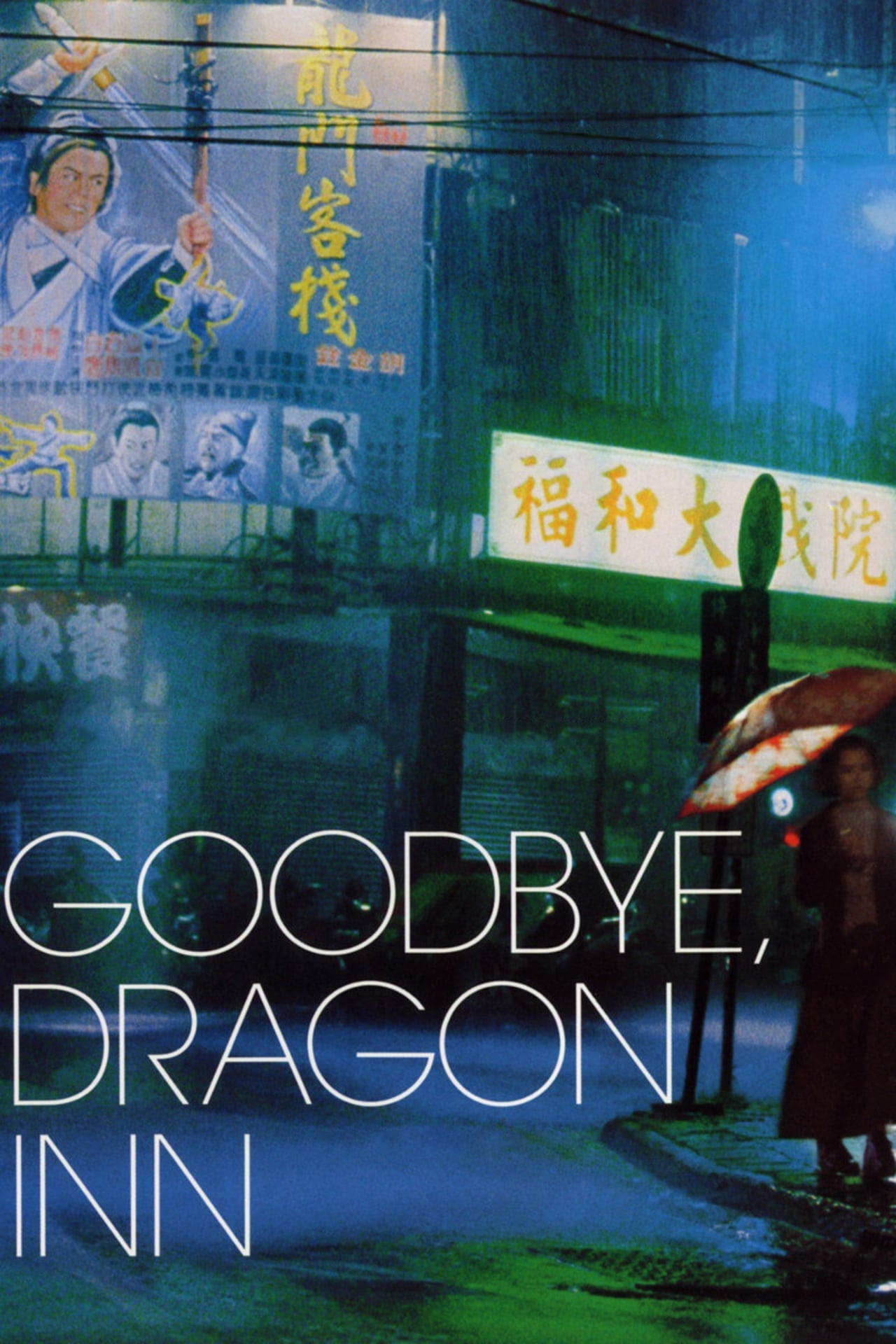
Goodbye, Dragon Inn centers on the final screening of King Hu’s 1967 wuxia film Dragon Inn in a decaying Taipei theater on its last night.
The sparse narrative follows the ticket attendant’s unrequited attempt to connect with the projectionist and, more prominently, a Japanese tourist’s repeated, unsuccessful attempts to cruise for anonymous sex with male patrons in the auditorium and restrooms. These cruising scenes form a sustained subplot that normalizes homosexual desire within the cinematic space, contrasting with the heterosexual longing of the ticket woman and explicitly challenging conventional film representations of desire.
Director Tsai Ming-liang, whose body of work recurrently explores queer themes and urban alienation, uses the theater’s real-life history as a gay cruising venue to structure multiple encounters, including propositions and rejections. The film’s minimal dialogue and long static shots emphasize bodies and unspoken longing, making the queer elements integral to the emotional texture rather than incidental background.
The core premise remains a poetic elegy for vanishing communal cinema and personal memory, with the cruising serving as one parallel thread among others, including cameos by original Dragon Inn actors watching their younger selves. No race- or gender-swapping of established characters occurs, and the work contains no explicit activist messaging or systemic-oppression framing. The prominent, affirmative depiction of gay cruising nonetheless elevates the score into the noticeable-to-significant range.
Key Factors
- Prominent subplot of gay cruising and homosexual desire in the theater
- Normalization of queer encounters as parallel to heterosexual longing
- Tsai Ming-liang’s recurring exploration of queer themes in an arthouse context
- No established-character casting changes or overt political lectures
Methodology: Each score synthesizes audience discourse, critic and aggregator reception, and press coverage — weighed against the work itself, not any single source.
Pro BreakdownPro
Identity Politics & Racial Essentialism
Gender Ideology & LGBTQ+ Themes
DEI Casting & Representation Mandates
Preachiness & Message-First Agenda
Corporate & Creator Activism
See how this title scores across all 5 woke subcategories with detailed explanations.
Unlock with ProFrom $3/month · 3-day trial for $1
The Woke Report
A curated roundup of newly scored movies, shows, and games, with the context behind the scores. Free. Unsubscribe anytime.
Privacy policyDirected by
Is Goodbye, Dragon Inn Woke?
We've run a full content analysis on Goodbye, Dragon Inn and scored it 6/10 on the woke scale. Read our detailed breakdown above to see exactly what we found.
Frequently Asked Questions
What kind of woke content is in Goodbye, Dragon Inn?
Our analysis checks for themes like identity politics, race-swapping, gender ideology, environmental activism, anti-religious messaging, and other progressive agenda elements. The score breakdown above shows which specific categories were flagged and how heavily they factor into Goodbye, Dragon Inn's overall score.
Is Goodbye, Dragon Inn family-friendly?
Wokeometer focuses on ideological content rather than traditional ratings (violence, language, etc.). Goodbye, Dragon Inn is rated 15+. For a full picture, combine our woke analysis with the age rating to decide if it's right for your family.
How does Wokeometer score movies?
We evaluate media across multiple ideological categories on a 0–10 scale. Scores of 0–3 mean story-first, 4–6 have moderate elements, and 7–10 flag heavily agenda-driven content. Learn more about our methodology →