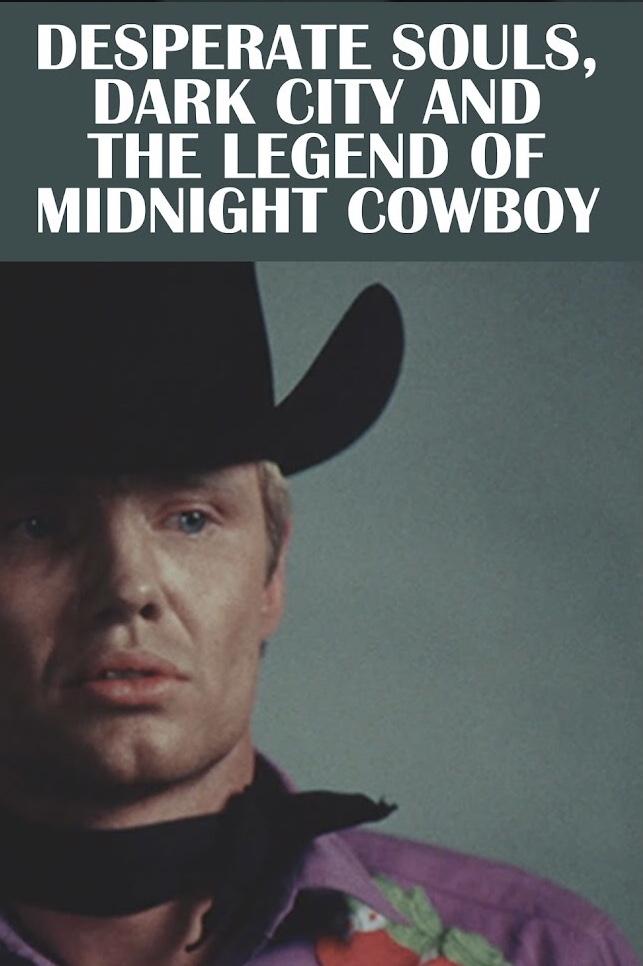
Desperate Souls, Dark City and the Legend of Midnight Cowboy
movie·NR·Jun 23, 2023·
Desperate Souls, Dark City and the Legend of Midnight Cowboy
movie
NR
June 23, 2023
Wokeometer Rating
6Mixed
Scale: 0 = not woke, 10 = maximally woke
TL;DR Verdict
The documentary scores a moderate 6/10 for wokeness by highlighting Midnight Cowboy's queer themes, critiques of traditional American myths, and ties to 1960s progressive movements like gay liberation and anti-war skepticism. These elements shape its structure and appeal but remain secondary to straightforward historical contextualization of the 1969 film.
Paid creator placementsFeature your article or video on this page
Detailed Analysis
The documentary centers its analysis on Midnight Cowboy's groundbreaking depiction of gay male sexuality and homoerotic elements in a major 1969 Hollywood release, framing director John Schlesinger's semi-concealed homosexual identity and the film's queer consciousness as revolutionary amid the sexual revolution.
It explicitly ties the story to broader 1960s upheavals including the Vietnam War as an allegory for the collapse of traditional American myths like the cowboy archetype, gay liberation movements, class alienation in decaying New York, and critiques of systemic lies about war and sexuality, with interviewees like Charles Kaiser linking anti-war skepticism directly to challenges against homophobia.
Nancy Buirski's approach amplifies these themes through archival footage, ironic editing juxtaposing film clips with Vietnam imagery, and discussions of the 'Other' encompassing indigenous parallels and marginalized figures, positioning the original film's tenderness between outcasts Joe Buck and Ratso Rizzo as emblematic of humanistic yet identity-infused social change. The work draws from Glenn Frankel's book and features commentators such as Lucy Sante and J. Hoberman to underscore how the era's ferment enabled such content, with creator statements emphasizing connections to liberation and the saveability of society's fringes.
While the core remains a historical contextualization of a classic film rather than inventing new identity-driven plots, the prominence of queer normalization, critiques of traditional norms and patriarchy-adjacent cowboy mythology, and explicit ties to progressive-era movements make these elements central to the documentary's appeal and structure, elevating it beyond incidental commentary without reaching the level of an entire premise built solely on activist messaging.
Key Factors
- Prominent highlighting of Midnight Cowboy's queer content and Schlesinger's identity as revolutionary
- Explicit framing of Vietnam, gay liberation, and anti-traditional myths as central contextual drivers
- Creator intent linking themes to 'the Other,' indigenous parallels, and social upheaval
Methodology: Each score synthesizes audience discourse, critic and aggregator reception, and press coverage — weighed against the work itself, not any single source.
Pro BreakdownPro
Identity Politics & Racial Essentialism
Gender Ideology & LGBTQ+ Themes
DEI Casting & Representation Mandates
Preachiness & Message-First Agenda
Corporate & Creator Activism
See how this title scores across all 5 woke subcategories with detailed explanations.
Unlock with ProFrom $3/month · 3-day trial for $1
The Woke Report
A curated roundup of newly scored movies, shows, and games, with the context behind the scores. Free. Unsubscribe anytime.
Privacy policyDirected by
Is Desperate Souls, Dark City and the Legend of Midnight Cowboy Woke?
We've run a full content analysis on Desperate Souls, Dark City and the Legend of Midnight Cowboy and scored it 6/10 on the woke scale. Read our detailed breakdown above to see exactly what we found.
Frequently Asked Questions
What kind of woke content is in Desperate Souls, Dark City and the Legend of Midnight Cowboy?
Our analysis checks for themes like identity politics, race-swapping, gender ideology, environmental activism, anti-religious messaging, and other progressive agenda elements. The score breakdown above shows which specific categories were flagged and how heavily they factor into Desperate Souls, Dark City and the Legend of Midnight Cowboy's overall score.
Is Desperate Souls, Dark City and the Legend of Midnight Cowboy family-friendly?
Wokeometer focuses on ideological content rather than traditional ratings (violence, language, etc.). Desperate Souls, Dark City and the Legend of Midnight Cowboy is rated NR. For a full picture, combine our woke analysis with the age rating to decide if it's right for your family.
How does Wokeometer score movies?
We evaluate media across multiple ideological categories on a 0–10 scale. Scores of 0–3 mean story-first, 4–6 have moderate elements, and 7–10 flag heavily agenda-driven content. Learn more about our methodology →