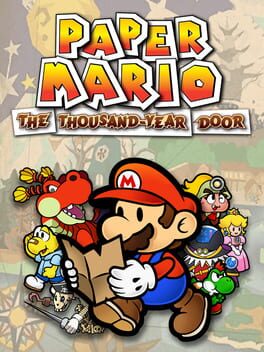
Paper Mario: The Thousand-Year Door
game·Jul 22, 2004
Paper Mario: The Thousand-Year Door
game
July 22, 2004
Wokeometer Rating
1Based
Scale: 0 = not woke, 10 = maximally woke
TL;DR Verdict
Paper Mario: The Thousand-Year Door scores a 1/10 for its total lack of progressive messaging, delivering a classic Mario adventure built on heroism, friendship, and Crystal Star quests instead of identity politics or social justice themes.
Paid creator placementsFeature your article or video on this page
Detailed Analysis
Paper Mario: The Thousand-Year Door (2004) is a traditional Mario RPG adventure centered on collecting Crystal Stars to defeat the Shadow Queen, with Mario recruiting original partner characters like Goombella, Koops, Flurrie, the player-named Yoshi Kid, Bobbery, and Vivian for combat and exploration.
The narrative follows classic fantasy tropes of heroism, friendship, and overcoming evil without any social justice framing, systemic oppression themes, or identity politics as plot drivers. Character designs and roles are organic to the Mario universe, with no gender or race swaps of prior established figures, no pronoun customization, no romance mechanics beyond light comedic Peach-TEC interactions, and no developer statements promoting diversity mandates. This low score stems from the complete absence of progressive messaging across thematic centrality, casting, and creator intent.
The premise rests entirely on standard adventure storytelling rather than identity-focused subplots or activist framing. All partners, including Vivian in the 2004 English release, appear as original characters without modern gender ideology, and the production shows no DEI consultancy, localization censorship for representation, or creator intent tied to progressive causes.
Key Factors
- Traditional Mario storytelling with no activist messaging or identity-focused subplots
- Original characters (including Vivian) presented without modern gender ideology in the 2004 English release
- Absence of DEI consultancy, localization censorship for representation, or creator intent tied to progressive causes
Methodology: Each score synthesizes audience discourse, critic and aggregator reception, and press coverage — weighed against the work itself, not any single source.
Pro BreakdownPro
Identity Politics & Racial Essentialism
Gender Ideology & LGBTQ+ Themes
DEI Casting & Representation Mandates
Preachiness & Message-First Agenda
Corporate & Creator Activism
See how this title scores across all 5 woke subcategories with detailed explanations.
Unlock with ProFrom $3/month · 3-day trial for $1
The Woke Report
A curated roundup of newly scored movies, shows, and games, with the context behind the scores. Free. Unsubscribe anytime.
Privacy policyIs Paper Mario: The Thousand-Year Door Woke?
We've run a full content analysis on Paper Mario: The Thousand-Year Door and scored it 1/10 on the woke scale. Read our detailed breakdown above to see exactly what we found.
Frequently Asked Questions
What kind of woke content is in Paper Mario: The Thousand-Year Door?
Our analysis checks for themes like identity politics, race-swapping, gender ideology, environmental activism, anti-religious messaging, and other progressive agenda elements. The score breakdown above shows which specific categories were flagged and how heavily they factor into Paper Mario: The Thousand-Year Door's overall score.
Is Paper Mario: The Thousand-Year Door appropriate for kids?
Wokeometer focuses on ideological content rather than traditional ratings (violence, language, etc.). For a full picture, combine our woke analysis with the official content rating to decide if it's right for your family.
How does Wokeometer score video games?
We evaluate media across multiple ideological categories on a 0–10 scale. Scores of 0–3 mean story-first, 4–6 have moderate elements, and 7–10 flag heavily agenda-driven content. Learn more about our methodology →