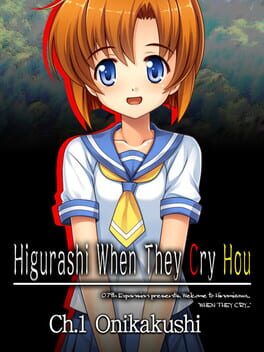
Higurashi When They Cry Hou: Ch.1 Onikakushi
game·May 15, 2015·
Higurashi When They Cry Hou: Ch.1 Onikakushi
game
May 15, 2015
Wokeometer Rating
0Based
Scale: 0 = not woke, 10 = maximally woke
TL;DR Verdict
Higurashi When They Cry Hou: Ch.1 Onikakushi scores 0/10 on wokeness by sticking to its original 1980s Japanese cast and rural curse mystery with zero identity politics, gender alterations, or systemic-oppression framing. The result is straightforward psychological horror free of activist messaging or DEI mandates.
Paid creator placementsFeature your article or video on this page
Detailed Analysis
Higurashi When They Cry Hou: Ch.1 Onikakushi is the 2015 PC release of the first chapter of the 2002 visual novel by 07th Expansion.
The story follows protagonist Keiichi Maebara as he moves to the rural village of Hinamizawa in 1983, befriends Rena Ryugu, Mion Sonozaki, Rika Furude, and Satoko Houjou, and gradually descends into paranoia amid local murders tied to a supposed curse and past dam protests. The narrative centers on psychological horror, suspicion, violence, and the breakdown of trust in a traditional Japanese village setting with no identity politics, systemic oppression framing, or critiques of norms.
All characters are fixed original Japanese creations fitting the 1980s rural context, with no gender or race alterations to established figures, no pronoun customization, no gender-agnostic romance mechanics, and no character creation options. The game features standard visual novel gameplay focused on reading text, viewing backgrounds and sprites, and experiencing the mystery without any modern activist elements or developer statements promoting DEI or representation mandates.
Reception shows overwhelmingly positive Steam scores around 96/100 and generally favorable Metacritic user scores with no documented controversies, review-bombing, or discourse labeling the title woke. Searches for LGBTQ content, DEI involvement, or localization censorship return no relevant results, confirming the work remains pure traditional horror-mystery entertainment.
Key Factors
- Traditional 1980s Japanese rural horror/mystery premise with paranoia and village curse themes
- Fixed original characters with no casting departures, identity politics, or LGBTQ+ focal elements
- Japanese developer 07th Expansion with no DEI statements or consultancy involvement
- No character customization, romance systems, or modern ideological framing in story or UI
Methodology: Each score synthesizes audience discourse, critic and aggregator reception, and press coverage — weighed against the work itself, not any single source.
Pro BreakdownPro
Identity Politics & Racial Essentialism
Gender Ideology & LGBTQ+ Themes
DEI Casting & Representation Mandates
Preachiness & Message-First Agenda
Corporate & Creator Activism
See how this title scores across all 5 woke subcategories with detailed explanations.
Unlock with ProFrom $3/month · 3-day trial for $1
The Woke Report
A curated roundup of newly scored movies, shows, and games, with the context behind the scores. Free. Unsubscribe anytime.
Privacy policyIs Higurashi When They Cry Hou: Ch.1 Onikakushi Woke?
We've run a full content analysis on Higurashi When They Cry Hou: Ch.1 Onikakushi and scored it 0/10 on the woke scale. Read our detailed breakdown above to see exactly what we found.
Frequently Asked Questions
What kind of woke content is in Higurashi When They Cry Hou: Ch.1 Onikakushi?
Our analysis checks for themes like identity politics, race-swapping, gender ideology, environmental activism, anti-religious messaging, and other progressive agenda elements. The score breakdown above shows which specific categories were flagged and how heavily they factor into Higurashi When They Cry Hou: Ch.1 Onikakushi's overall score.
Is Higurashi When They Cry Hou: Ch.1 Onikakushi appropriate for kids?
Wokeometer focuses on ideological content rather than traditional ratings (violence, language, etc.). For a full picture, combine our woke analysis with the official content rating to decide if it's right for your family.
How does Wokeometer score video games?
We evaluate media across multiple ideological categories on a 0–10 scale. Scores of 0–3 mean story-first, 4–6 have moderate elements, and 7–10 flag heavily agenda-driven content. Learn more about our methodology →