Dear Esther
game·Feb 14, 2012·
Dear Esther
game
February 14, 2012
Wokeometer Rating
0Based
Scale: 0 = not woke, 10 = maximally woke
TL;DR Verdict
Dear Esther scores 0/10 for woke content by focusing solely on grief, guilt, and redemption through an atmospheric island narrative with no identity politics or social agendas.
Paid creator placementsFeature your article or video on this page
Detailed Analysis
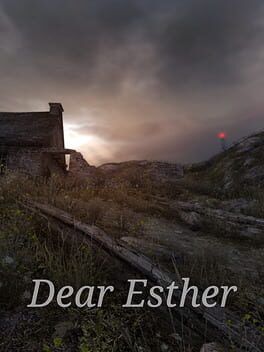
Dear Esther is a 2012 walking-simulator narrative experience set on a remote, desolate Hebridean island.
The player explores while listening to fragmented voice-over letters from an unnamed narrator addressing his deceased wife Esther, revealing a story of a fatal car accident, guilt, possible suicide, and blurred identities with historical island figures like a syphilitic explorer Donnelly and a shepherd Jakobson. The core premise centers on personal grief, loss, guilt, and redemption with no interactive characters, romance systems, or player customization.
No progressive ideological elements appear in the released content. Searches for LGBTQ, queer representation, diversity mandates, or DEI yield only unrelated academic interpretations or external topics; the story contains none. Developer statements from Dan Pinchbeck and The Chinese Room emphasize experimental storytelling, ambiguity, and removing traditional gameplay mechanics for emotional immersion, with no activist intent or social commentary.
Controversies center on whether the title qualifies as a "game" versus pretentious art or an interactive audiobook, not political messaging. The 2012 release predates widespread industry DEI influences, and reception focuses on atmosphere and narrative ambiguity rather than identity politics. The provided screenshots confirm the atmospheric, empty island setting with no modern or ideological visuals.
Key Factors
- Traditional themes of grief, loss, guilt, and redemption with no identity politics or social commentary
- No characters, romance mechanics, or customization options; pure narrated exploration
- Developer focus on experimental narrative ambiguity, not activism or representation
- 2012 release with controversies limited to "is it a game" debates, no woke backlash or DEI claims
Methodology: Each score synthesizes audience discourse, critic and aggregator reception, and press coverage — weighed against the work itself, not any single source.
Pro BreakdownPro
Identity Politics & Racial Essentialism
Gender Ideology & LGBTQ+ Themes
DEI Casting & Representation Mandates
Preachiness & Message-First Agenda
Corporate & Creator Activism
See how this title scores across all 5 woke subcategories with detailed explanations.
Unlock with ProFrom $3/month · 3-day trial for $1
The Woke Report
A curated roundup of newly scored movies, shows, and games, with the context behind the scores. Free. Unsubscribe anytime.
Privacy policyIs Dear Esther Woke?
We've run a full content analysis on Dear Esther and scored it 0/10 on the woke scale. Read our detailed breakdown above to see exactly what we found.
Frequently Asked Questions
What kind of woke content is in Dear Esther?
Our analysis checks for themes like identity politics, race-swapping, gender ideology, environmental activism, anti-religious messaging, and other progressive agenda elements. The score breakdown above shows which specific categories were flagged and how heavily they factor into Dear Esther's overall score.
Is Dear Esther appropriate for kids?
Wokeometer focuses on ideological content rather than traditional ratings (violence, language, etc.). For a full picture, combine our woke analysis with the official content rating to decide if it's right for your family.
How does Wokeometer score video games?
We evaluate media across multiple ideological categories on a 0–10 scale. Scores of 0–3 mean story-first, 4–6 have moderate elements, and 7–10 flag heavily agenda-driven content. Learn more about our methodology →