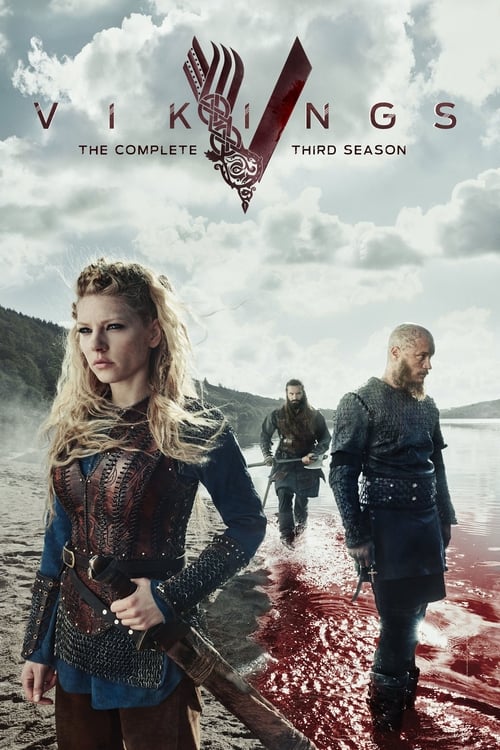
Vikings Season 3 maintains a focus on historical drama, Viking raids, personal ambitions, and epic battles like the siege of Paris, with virtually no overt progressive ideological intrusions. Casting aligns perfectly with the 9th-century European setting, featuring white actors portraying Norse and Anglo-Saxon characters without race-swapping or forced diversity. Strong female characters like Lagertha as a shieldmaiden and earl are drawn from Viking sagas and lore, feeling organic to the source material rather than modern impositions. Creator Michael Hirst emphasizes authentic storytelling and highlights historical Viking attitudes toward women (e.g., property rights, divorce) as more enlightened than Christian societies, but this serves the narrative contrast without lectures on systemic patriarchy or identity politics. Themes center on faith conflicts (pagan vs. Christian), betrayal, and exploration, prioritizing entertainment over activism. No prominent LGBTQ+ representation or subplots in Season 3; any subtext (e.g., Ragnar-Athelstan) is ambiguous and incidental. Audience reception praises the season's action and drama, with negligible backlash labeling it 'woke'—criticisms target the later spin-off Valhalla instead. This season exemplifies traditional, apolitical historical fiction that delivers compelling entertainment unmarred by contemporary social justice messaging.