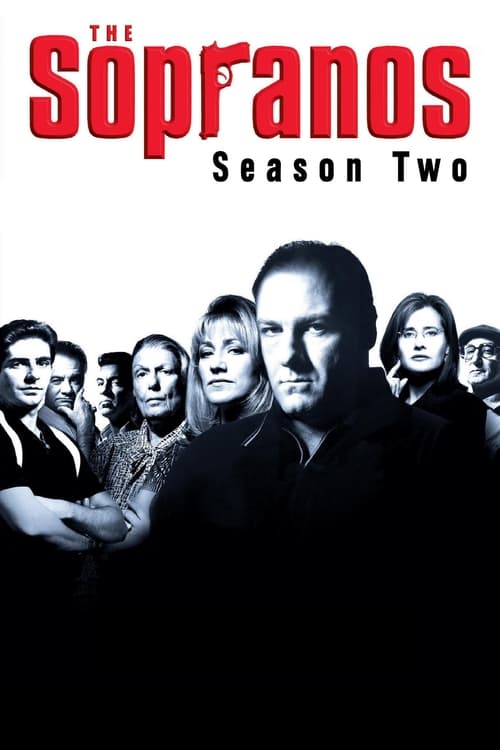
The Sopranos Season 2, airing in 2000, exhibits virtually no progressive ideological influence. The storytelling centers on traditional mob drama: Tony Soprano's ascension as boss amid family strife, power struggles within the DiMeo crime family, personal therapy sessions, and Italian-American cultural tensions. Key arcs involve Uncle Junior's imprisonment, Livia's hospitalization, Janice's disruptive return as a flaky ex-hippie, and episodes like the Italy business trip in 'Commendatori' or the rapper Massive Genius in 'A Hit is a Hit,' which portray ethnic rivalries and cultural clashes organically without social justice messaging. Casting is authentic to the New Jersey mob world—all principal roles filled by white actors of Italian descent (Gandolfini, Falco, Imperioli, Sirico, etc.), with no race-swapping, gender alterations, or forced diversity; minor non-white characters like the rapper or black associates are stereotypical and peripheral, fitting the era's mob dynamics rather than promoting inclusion. Themes explore psychological turmoil, family dysfunction, loyalty, and violence, with therapy as personal catharsis, not systemic critique. Janice embodies countercultural liberal traits (veganism, Buddhism, anti-establishment rants) but is depicted satirically as selfish, manipulative, and burdensome, culminating in her flight after betrayal—not celebrated. No explicit lectures on patriarchy, identity politics, or equity; creator David Chase focused on character authenticity and mob life without activist intent. Reception was universal acclaim for narrative depth, with zero contemporary or retrospective backlash labeling it 'woke'; modern discussions position the series as anti-woke or apolitical, critiquing both sides without progressive dominance.