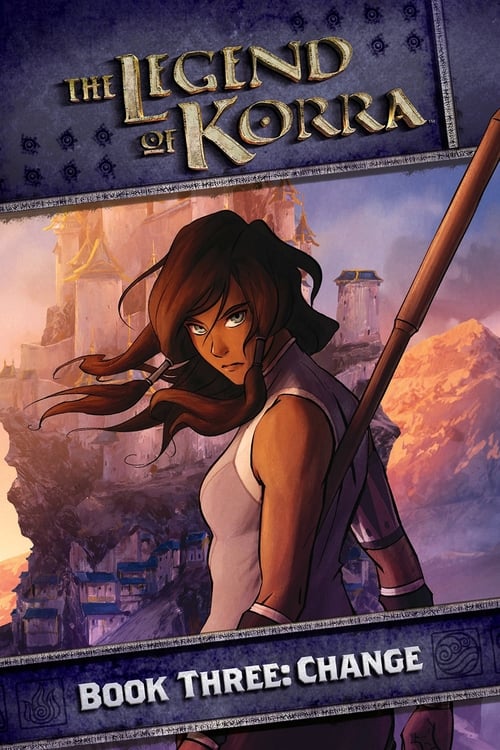
The Legend of Korra Season 3 (Book Three: Change) features virtually no overt progressive ideological influence, maintaining a focus on traditional adventure storytelling, spiritual growth, and high-stakes action in a richly built fantasy world. Korra's role as a strong female protagonist and Jinora's achievement as the first airbending master feel organic extensions of the established Avatar universe's character-driven narratives, without injecting modern identity politics, DEI mandates, or lectures on systemic oppression. The diverse cast and backgrounds align seamlessly with the world's multicultural bending nations, appearing incidental rather than forced for contemporary representation quotas. Political elements center on Zaheer's anarchist philosophy versus institutional order, presented as a neutral ideological clash with villainous consequences, not a vehicle for progressive activism, critiques of traditional norms, patriarchy, or toxic masculinity. No prominent LGBTQ+ storylines, gender fluidity, or intersectional themes drive the plot; romances are resolved prior, and the season emphasizes team dynamics and rebuilding the Air Nation through merit and training. Creators' interviews show no activist intent for this season, and reception is overwhelmingly positive, hailed as the series' strongest with minimal controversy—far from 'woke' backlash. This purity of entertainment-first approach, unmarred by social justice intrusions, allows the season to shine as compelling, apolitical escapism.