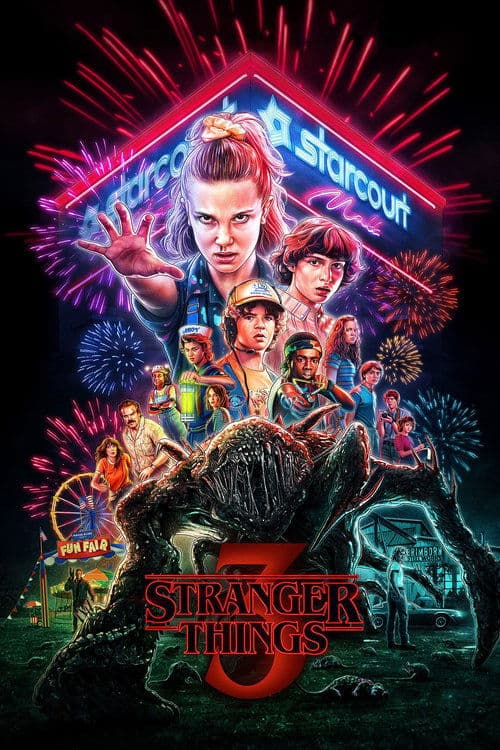
Stranger Things Season 3 features minor incidental progressive elements that integrate organically into the 1980s small-town setting without driving the narrative or overshadowing the core sci-fi/horror entertainment. The primary example is Robin Buckley's introduction as a lesbian, revealed in a heartfelt bathroom scene with Steve Harrington after an initial setup teasing heterosexual romance; this change was suggested by actress Maya Hawke and approved by the Duffer Brothers during filming, earning widespread praise for authentic queer representation rather than backlash. Robin's arc supports her friendship with Steve and team dynamics, not identity politics. Casting includes ongoing organic diversity from prior seasons—Black characters Lucas and prominent Erica Sinclair, Dustin's disability—but no race/gender-swaps, forced inclusions clashing with source/setting, or DEI mandates evident. Themes center on 1980s nostalgia, budding romances (mostly heterosexual), family bonds, consumerism satire (mall vs. local shops), and Cold War Russians as villains, with no overt social justice lectures, systemic critiques, or activist intent from creators. Reception was overwhelmingly positive (RT Tomatometer ~89%, Audience ~90%+), with no 'woke' review-bombing or audience uproar; criticisms focused on pacing or polarizing plot twists, not progressive messaging. Later seasons (e.g., S5) drew 'woke' ire, but S3 remains a high point for fun, unforced storytelling.