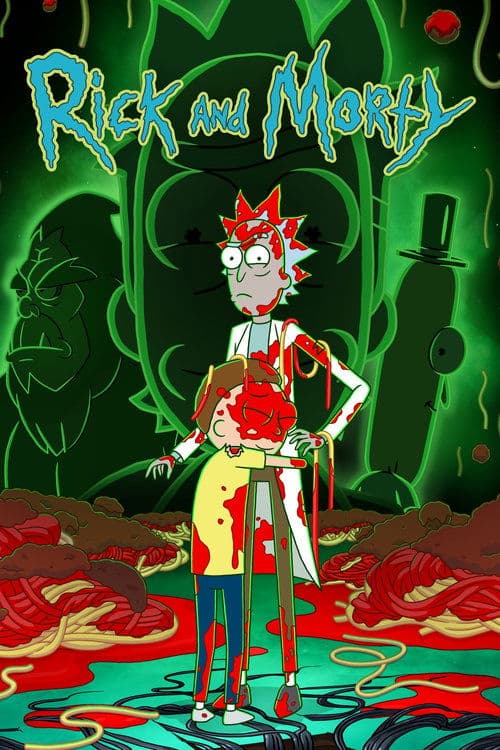
Rick and Morty Season 7 maintains the show's signature blend of multiverse sci-fi adventures, nihilistic humor, family satire, and irreverent political mockery without injecting prominent progressive ideological elements. Casting changes replaced Justin Roiland with Ian Cardoni and Harry Belden due to his personal scandals, not DEI mandates, preserving the original character designs and voices indistinguishably. Themes revolve around addiction intervention, mind swaps, hive-mind cults, food origins from suicides, revenge arcs, adventure audits, body horror fusion, math invasions, afterlife exploits, and fear confrontations—pure entertainment focused on absurdity and existential dread. Minor incidental elements include recurring therapist Dr. Wong addressing mental health and Summer briefly dating a woman after a Kuato parody episode, but these feel organic to the chaotic world-building and do not drive plots or deliver lectures. Satirical jabs at presidents, popes, and cults mock authority across the board without systemic critiques or identity politics. No race/gender-swaps, forced diversity clashing with canon, or creator-stated activism; Dan Harmon emphasized narrative sustainability over messaging. Audience reception criticized voice transitions and uneven quality, not 'woke' intrusions, allowing the season to deliver classic, unburdened fun.