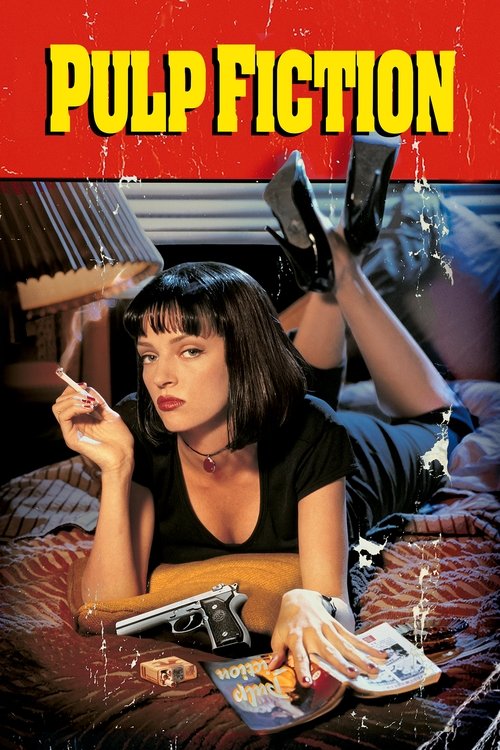
Pulp Fiction, released in 1994, exemplifies pure entertainment through its non-linear storytelling, sharp dialogue, pop culture references, violence, and dark humor in interconnected crime tales. There are no progressive ideological elements driving the narrative—no lectures on systemic oppression, identity politics, or social justice activism. Themes focus on redemption (e.g., Jules's Ezekiel miracle), chance, and moral ambiguity, delivered without contemporary moralizing. Casting features organic diversity for a Los Angeles underworld setting, with strong roles for Samuel L. Jackson and Ving Rhames as hitmen, alongside white leads like John Travolta and Uma Thurman; this feels authentic to the milieu rather than forced DEI quotas or race/gender swaps, as it's an original screenplay. Creator Quentin Tarantino has never emphasized activist intent, and the film predates modern wokeness, earning universal acclaim as a cultural phenomenon without ideological backlash—controversies centered on violence and language, not politics. Modern discussions occasionally contrast it favorably against today's 'woke' films, praising its edginess that would be unmakeable now. This unadulterated focus on thrilling, apolitical pulp storytelling makes it a timeless triumph free from progressive intrusions.