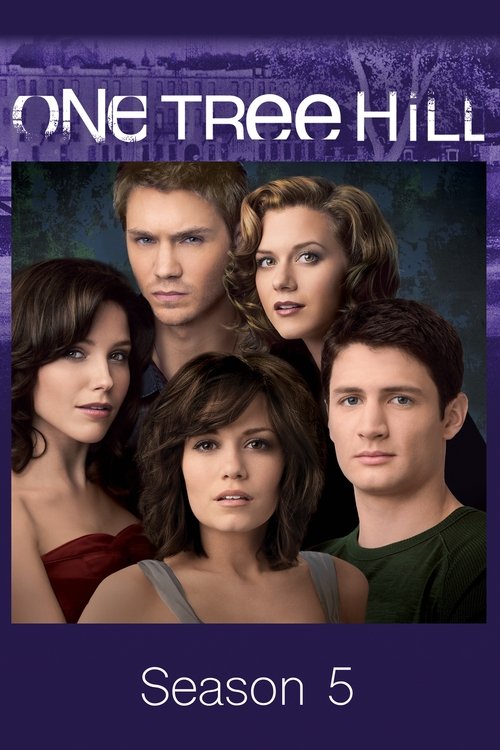
One Tree Hill Season 5 features a traditional teen-to-adult drama narrative centered on personal growth, romance, family dynamics, and post-college struggles, with no discernible progressive ideological influence driving the storytelling. The time jump refreshes the series by exploring characters' careers, relationships, and redemption arcs—like Lucas's writing, Brooke's fashion business, Peyton's music pursuits, and Nathan and Haley's parenting—without injecting identity politics, systemic critiques, or social justice messaging. Casting remains consistent with the original ensemble, including organic supporting diversity such as Black actors portraying basketball players Skills and Quentin Fields, which aligns naturally with the small-town North Carolina high school and sports setting rather than forced DEI mandates. There are no race-swaps, gender-swaps, prominent LGBTQ+ storylines, or lecture moments; earlier seasons had minor bisexual representation, but Season 5 focuses purely on heterosexual romances and personal dramas like addiction, prison visits, and adoption considerations handled apolitically. Creator Mark Schwahn's intent emphasized underdog basketball tales and fan-engaging love triangles, not activism. Reception was positive for reinventing the show, with modern fans occasionally noting retrospective lack of diversity, but no backlash accusing it of wokeness—in fact, the absence of heavy-handed progressive elements preserves its entertaining, escapist quality as a classic soap opera.