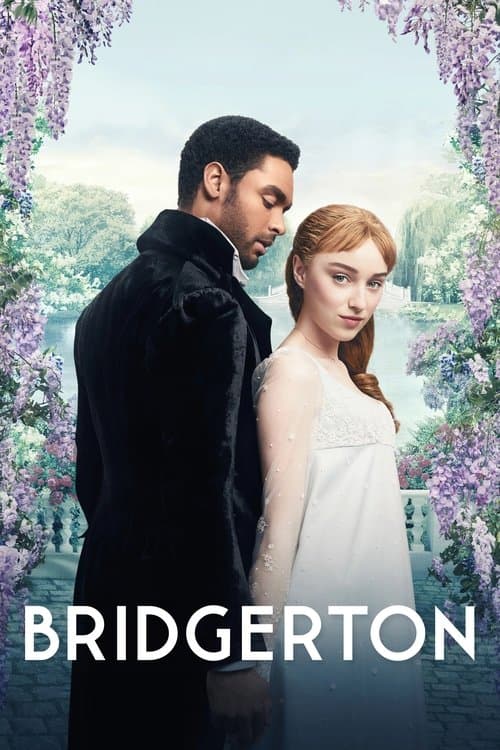
Bridgerton Season 1 exemplifies heavy progressive ideological influence through its deliberate color-blind and race-swapped casting that fundamentally alters the Regency-era source material from Julia Quinn's novels, prioritizing DEI mandates over historical or narrative fidelity. Regé-Jean Page's portrayal of the Duke of Hastings, a role originally white in the books, as a black lead opposite a white Daphne Bridgerton, alongside Golda Rosheuvel as a black Queen Charlotte wielding immense power, represents unjustified race-swapping that clashes with the all-white aristocratic setting of 1813 London high society. This forced diversity is not organic but a core marketing ploy by Shonda Rhimes, who has repeatedly emphasized creating an 'inclusive' fantasy world where race is irrelevant, effectively handwaving racism to indulge modern identity politics without substantive exploration, resulting in accusations of 'hollow diversity.' Creator interviews reveal explicit activist intent to challenge norms and reflect contemporary demographics in a period piece, compromising authentic storytelling for performative representation. While the romance plot dominates, these elements intrude as constant visual reminders, sparking significant audience backlash labeling it 'woke,' with racist fandom toxicity and criticisms of historical inaccuracy undermining the escapist entertainment value. The show's success masks how this ideological overlay prioritizes messaging over coherent world-building, alienating traditional viewers and fueling 'go woke go broke' sentiments evident in ongoing controversies.