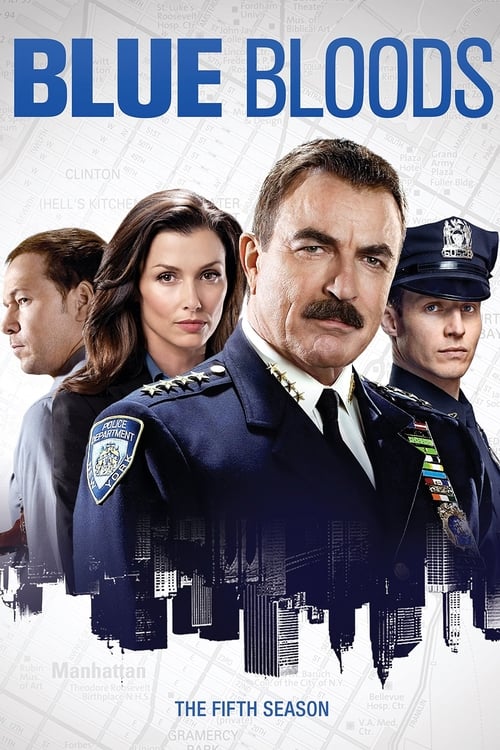
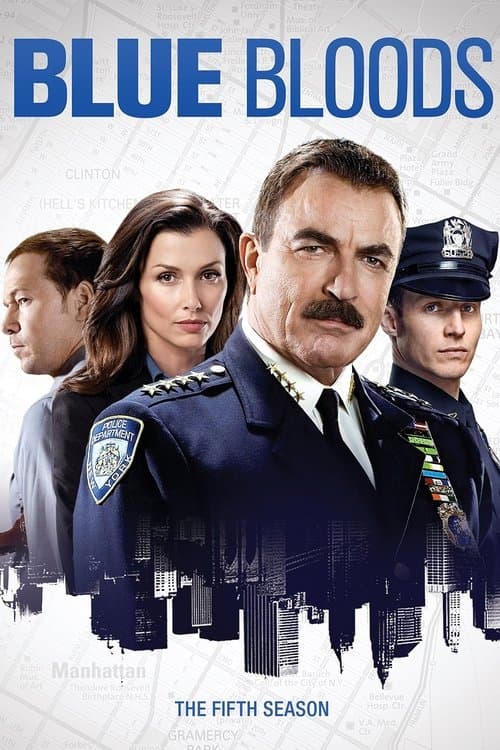
Blue Bloods Season 5 maintains a traditional law-and-order focus centered on the Reagan family's police work and Catholic family values, with family dinners reinforcing conventional norms. Progressive elements are minor and incidental, such as a single episode featuring a gay detective outed during a hate crime intervention, where the NYPD supports him without making identity politics central, and Frank Reagan mildly critiques the Catholic Church's outdated stance on homosexuality without pushing activism. Accusations of police brutality in 'Excessive Force' are portrayed as false and manipulated by an antagonistic Black reverend, ultimately vindicating the cop and critiquing community agitators. Other light touches include class divides in 'The Poor Door' and potential hate crimes against Jews, but these serve episodic plots without systemic critiques or lectures on patriarchy, racism, or identity politics. Casting features organic diversity with Latina detective Maria Baez and Black recurring characters like Reverend Potter (antagonistic) and Lt. Carver, but the core Reagan family remains traditionally white and Irish-American, fitting the show's New York cop family premise without forced changes. No creator statements emphasize inclusion mandates, and reception lacks backlash for wokeness; the season prioritizes entertainment, cop heroism, and family bonds over any ideological agenda, delivering straightforward procedural storytelling free from heavy-handed messaging.