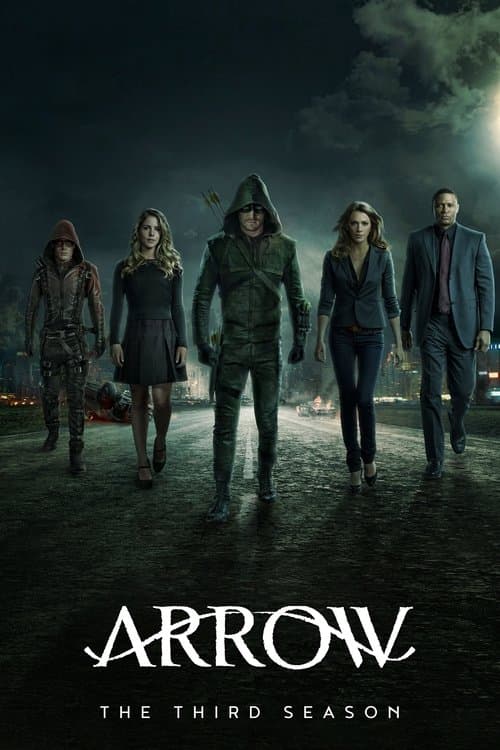
Arrow Season 3 features incidental progressive elements that feel organic to its superhero ensemble without driving the core narrative, which centers on Oliver Queen's battles against Ra's al Ghul and the League of Assassins, themes of redemption, family legacy, and vigilantism. Casting includes ongoing diversity from prior seasons, such as John Diggle race-bent as a black ex-soldier sidekick, and prominent female roles like Felicity Smoak as the tech genius and Laurel Lance ascending to Black Canary. LGBTQ representation appears through Nyssa al Ghul's lesbian identity and her past relationship with bisexual Sara Lance, who is dramatically killed off in the premiere to motivate male characters' arcs, sparking fridging and queer rep controversy but not framed as activist messaging. No overt social justice lectures, systemic critiques, or identity politics dominate; these elements serve the action plot rather than preaching. Creators emphasized natural character portrayals without labels, avoiding heavy-handed inclusion pushes. Reception focused on storytelling flaws like the Olicity romance and Sara's death, not woke backlash, allowing the season to prioritize thrilling entertainment over ideology. This restraint keeps the show refreshingly focused on classic heroics, unburdened by contemporary activism.