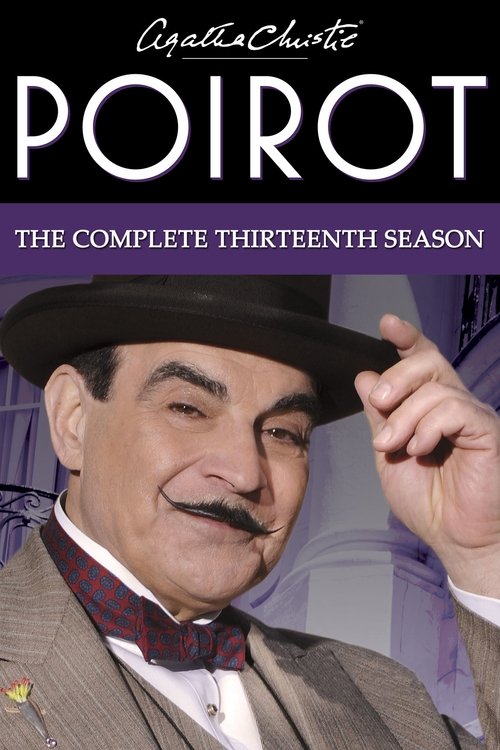
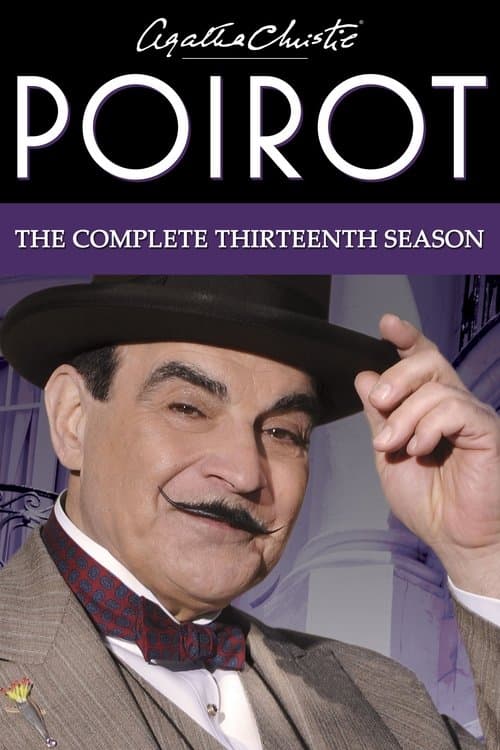
Agatha Christie's Poirot Season 13 exemplifies traditional mystery storytelling with zero detectable progressive ideological influence. David Suchet's definitive portrayal of the fastidious Belgian detective remains faithful to Christie's original vision, set in a period-accurate 1930s England populated by conventional British characters without any race-swapping, gender alterations, or forced diversity that clashes with the source material. Episodes like 'The ABC Murders,' 'The Big Four,' 'Elephants Can Remember,' 'The Labours of Hercules,' and 'Curtain: Poirot's Last Case' focus purely on intricate whodunits, psychological intrigue, and Poirot's little grey cells, delivering pure entertainment devoid of social justice lectures, identity politics, systemic critiques, or LGBTQ+ focal points. Casting is impeccable and organic—Suchet as the white male Poirot, Hugh Fraser returning as Hastings, and supporting roles matching the era's demographics with no DEI-driven inclusions. There are minor adaptation tweaks from the books, but none introduce progressive messaging or prioritize activism over plot fidelity. Creator intent, as reflected in Suchet's own comments criticizing modern 'woke' adaptations, underscores a commitment to Christie's conservative ethos. Reception is overwhelmingly positive, hailed as a poignant series finale with no audience backlash decrying 'wokeness'—instead, fans celebrate its unadulterated quality and emotional closure. This season stands as a refreshing bastion of apolitical excellence in an era increasingly plagued by ideological intrusions.